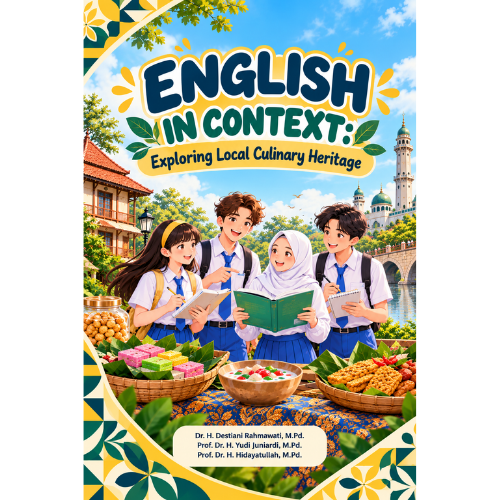

ENGLISH IN CONTEXT
ENGLISH IN CONTEXT: Exploring Local Culinary Heritage is an English learning book designed to help students develop their language skills through the exploration of traditional foods and beverages from Tangerang. The book focuses on procedural texts, guiding students to understand instructions, recognize ingredients and cooking tools, develop relevant vocabulary, and write clear and concise procedural steps. By integrating English language learning with local culinary traditions, this book provides a meaningful learning experience that promotes communication skills, cultural awareness, creativity, and appreciation of local heritage.
Foreword
The Foreword presents the background and purpose of developing this book, highlighting the importance of contextual English learning and the integration of local culinary heritage into educational activities. It also expresses the hope that the book will support teachers and students in creating engaging learning experiences while fostering appreciation for the cultural richness of Tangerang.
Introduction to the Book
This section introduces the book’s purpose, learning focus, and contextual approach. It explains how traditional foods and beverages from Tangerang can serve as meaningful learning resources for developing English language skills, particularly in understanding and writing procedural texts. Students are encouraged to connect language learning with everyday experiences and the cultural heritage of their local community.
Book Overview
The Book Overview provides a general description of the book’s structure, learning materials, and activities. The book is organized into four units that guide students from an introduction to procedural texts and Tangerang cuisine to identifying ingredients and tools, writing clear instructions, and presenting their own procedural texts. Each unit incorporates learning objectives and activities to support students’ language development through contextual and interactive learning.
Introduction to Procedural Texts and Tangerang Cuisine
Unit 1 introduces students to the concept and characteristics of procedural texts through the context of traditional Tangerang cuisine. Students explore the purpose of procedural texts, become familiar with local culinary traditions, and learn how instructions are used to explain the process of preparing food and beverages.
Learning Objectives
This section outlines the expected learning outcomes, including identifying the purpose and characteristics of procedural texts, recognizing their basic structure, and connecting English learning with local culinary heritage.
Conversation
The Conversation section presents a contextual dialogue that introduces students to discussions about food, traditional dishes, and the steps involved in preparing a particular culinary product. It provides examples of English expressions used in everyday communication.
Description
This section describes procedural texts and their relevance to explaining how something is made or done. Students are introduced to the relationship between purpose, materials, and sequential steps, using traditional Tangerang foods and beverages as contextual examples.
Listening Activity
The Listening Activity provides opportunities for students to practice listening comprehension through spoken information related to procedural texts and local cuisine. Students develop their ability to identify important details, understand instructions, and recognize the sequence of actions presented in an oral text.
Ingredients and Tools
Unit 2 focuses on the vocabulary and expressions used to identify ingredients and cooking tools. Through examples related to traditional Tangerang cuisine, students learn to recognize materials, utensils, and their functions as essential components of procedural texts.
Learning Objectives
Students are expected to identify common ingredients and cooking tools, understand their functions, and use relevant English vocabulary to describe the materials needed to prepare traditional foods and beverages.
Listening Activity
This activity helps students recognize the names, quantities, and functions of ingredients and tools through listening exercises. Students practice identifying key information and connecting spoken instructions with the materials required for a particular preparation process.
Description
The Description section explains the role of ingredients and tools in procedural texts. Students learn how these elements are presented and described to provide clear information before the preparation steps begin.
Vocabulary
This section introduces essential vocabulary related to ingredients, cooking utensils, quantities, measurements, and food preparation. The vocabulary activities support students in expanding their word knowledge and using appropriate terms in English.
Understanding Key Terms
Students explore the meanings and uses of important terms commonly found in procedural texts. This section strengthens their understanding of culinary vocabulary and helps them interpret instructions accurately.
Exercises
The exercises reinforce students’ understanding of ingredients, cooking tools, and related vocabulary through structured practice. Students apply what they have learned by identifying terms, matching words with meanings, and completing relevant tasks.
Reflection
The Reflection section encourages students to review their learning experiences, identify vocabulary they have mastered, recognize difficulties they encountered, and consider how their knowledge can be applied to describing local culinary practices.
Writing Clear and Concise Steps
Unit 3 develops students’ ability to write procedural steps that are clear, concise, logical, and easy to follow. Students explore language functions and communication strategies that support the preparation of procedural texts, particularly those describing how to make traditional Tangerang foods and beverages.
Learning Objectives
This section presents the learning outcomes related to organizing procedural steps, using appropriate imperative sentences and sequence markers, and expressing instructions clearly in written and spoken English.
Listening Activity
Students listen to spoken instructions and identify the sequence of actions, important details, and expressions used in procedural contexts. This activity supports their understanding of how clear oral instructions can guide the writing process.
Language Functions
This section introduces language functions commonly used in procedural texts, including giving instructions, expressing sequence, naming actions, and describing preparation processes. Students learn to use imperative sentences and sequencing expressions to produce coherent and understandable instructions.
Conversation
The Conversation section provides examples of everyday communication related to explaining and discussing preparation steps. Students become familiar with expressions that can be used to ask for information, clarify instructions, and describe the process of making food and beverages.
Dialogue
This section presents a dialogue that illustrates the use of English in a practical culinary context. Through the dialogue, students observe how instructions and explanations can be communicated clearly and how relevant vocabulary supports effective interaction.
Speaking Activity
The Speaking Activity gives students opportunities to practice explaining procedural steps orally. Students develop fluency, pronunciation, and confidence while describing the process of preparing a selected food or beverage using appropriate vocabulary and sequencing expressions.
Reading Activity
The Reading Activity helps students analyze procedural texts by identifying their purpose, structure, vocabulary, and sequence of instructions. Students practice understanding written information and use their reading comprehension to support the development of their own procedural texts.
Polishing and Presenting Your Procedural Text
Unit 4 focuses on refining and presenting students’ procedural texts. Students are guided to review their writing, improve clarity and organization, check vocabulary and grammatical accuracy, and present their final work. This unit encourages students to demonstrate their English skills while sharing knowledge of traditional Tangerang cuisine and appreciating local culinary heritage.
Learning Objectives
Students are expected to revise and improve procedural texts, organize instructions logically, check the accuracy of language use, and communicate their final work effectively through written or oral presentations.
Closing
The Closing section summarizes the learning experience and reinforces the importance of developing English communication skills through contextual learning. It encourages students to apply their knowledge of procedural texts in everyday situations and to appreciate, preserve, and share the culinary traditions of Tangerang as part of their local cultural identity.
References
The References section lists the sources used in developing the learning materials, including relevant books, educational resources, and other publications that support the discussion of procedural texts, English language learning, and local culinary heritage.
Biography
The Biography section introduces the author or contributors responsible for developing this book. It provides relevant information about their educational background, professional experience, and involvement in English language education and the development of contextual learning resources.
About This Book
ENGLISH IN CONTEXT: Exploring Local Culinary Heritage brings together English language learning and the cultural richness of Tangerang through the exploration of traditional foods and beverages. By guiding students through listening, speaking, reading, vocabulary development, and procedural writing activities, this book aims to create meaningful learning experiences that strengthen communication skills and cultural awareness. Ultimately, it encourages students to recognize local culinary heritage as a valuable learning resource and an important part of cultural identity.


Ulasan
Belum ada ulasan.